
Pond Bottom Sludge Digester
Enzymatic Deep-Bed Digestion of Accumulated Organic Bottom Detritus. Clinically formulated to eliminate symptoms without antibiotic residues or export penalties.
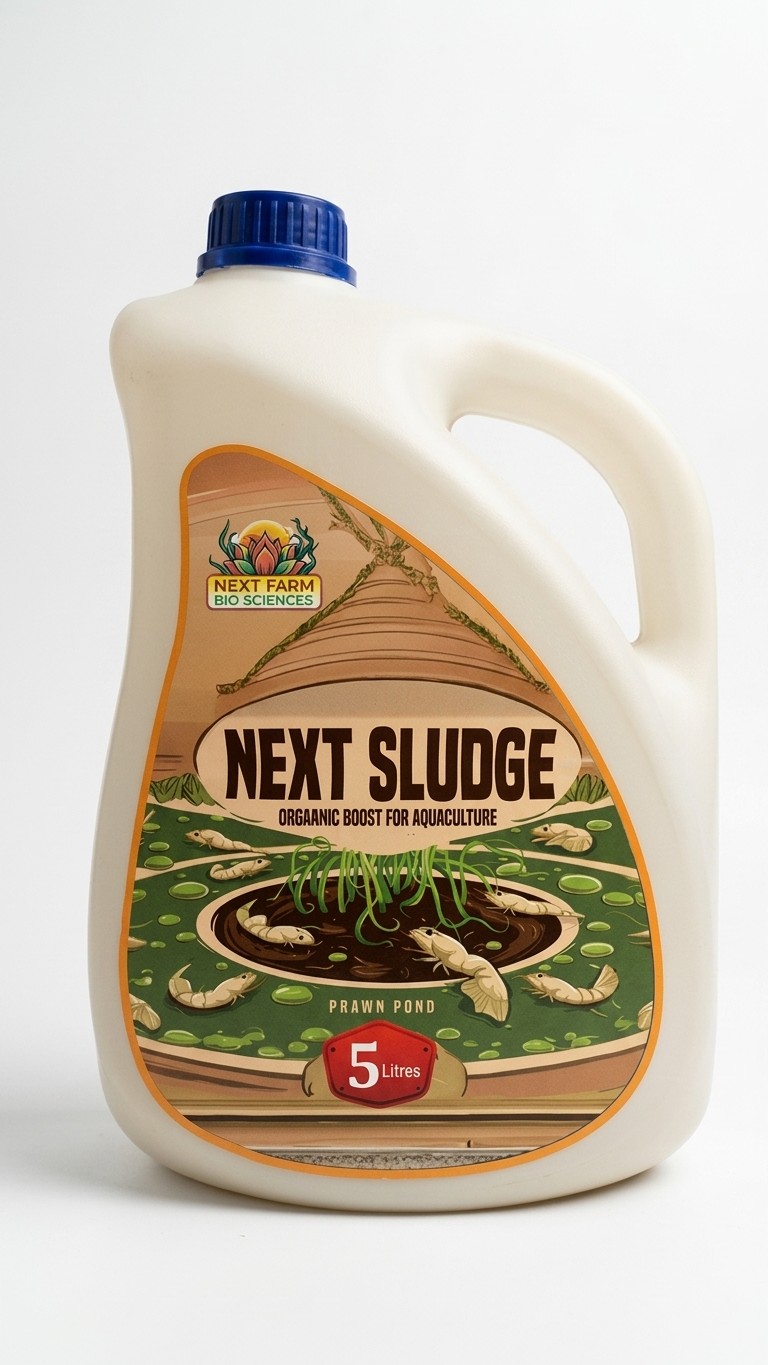
Next Sludge
Deep Benthic Bio-Digestion: Liquefy Pond Sludge & Restore Bottom Soil
- Dosage in Feed: Not applied in feed (water & soil broadcast only)
- Water Broadcast: 1.5 to 2.0 Liters per Acre (Heavy Sludge); 1.0 L/Acre every 10-14 days
- Turnaround Time: 48 to 72 hours noticeable recovery
Unsure of water parameters or mortality rate? Share water test readings for immediate customized dosage.
Recognizing the Symptoms
Visual indicators observed in check trays and water
- 1Black rotten mud and foul-smelling sulfur odor when pulling check tray anchors.
- 2Shrimp tails and swimmerets covered in black stains or rusty deposits.
- 3Bubbles of hydrogen sulfide (H2S) gas rising to pond surface on sunny afternoons.
- 4Shrimp avoiding bottom center feeding zones and congregating along pond edges.
- 5Slow molting and poor bottom feed conversion.
Biological Root Causes
Pathogens, water chemistry & environmental triggers
- 1Continuous accumulation of unconsumed shrimp feed pellets over 40+ DOC.
- 2High shrimp stocking density generating hundreds of kilograms of fecal waste.
- 3Inadequate aeration leaving pond floor central dead zones anaerobic (oxygen < 1 ppm).
- 4Accumulation of dead microalgae sediment after plankton crashes.
5-Day Step-by-Step Treatment Protocol
Follow this exact day-by-day regimen to achieve full clinical recovery.
Normal feeding with strict feeding tray monitoring.
Apply Next Sludge @ 2.0 Liters per Acre mixed with sand or pond water.
Normal feeding.
Inspect bottom soil core; black soil thickness noticeably shrinks.
Normal feeding.
Apply maintenance dose of Next Sludge @ 1.0 L/Acre.
Farmer Case: T. Rajesh (Machilipatnam, Krishna District, Andhra Pradesh)
"Bottom soil core showed 6 inches of foul black mud with H2S gas bubbles causing shrimp feed refusal. Applied Next Sludge @ 2 Liters/Acre. Within 5 days, sludge depth reduced by over 60%, black discoloration cleared, and feed trays cleared completely."
Frequently Asked Questions
Expert scientific guidance for prawn & shrimp cultivators
Related Aquaculture Disease Guides
White Gut Medicine for Shrimp
Rapid Enteric Restoration & Pathogen Cleansing for Penaeus vannamei and Monodon
Ammonia Reducer in Shrimp Pond
High-Speed Biological Nitrogen Gas Conversion & TAN Neutralization
Vibrio Medicine for Shrimp
Targeted Antagonistic Biocontrol Against Pathogenic Vibrio Species